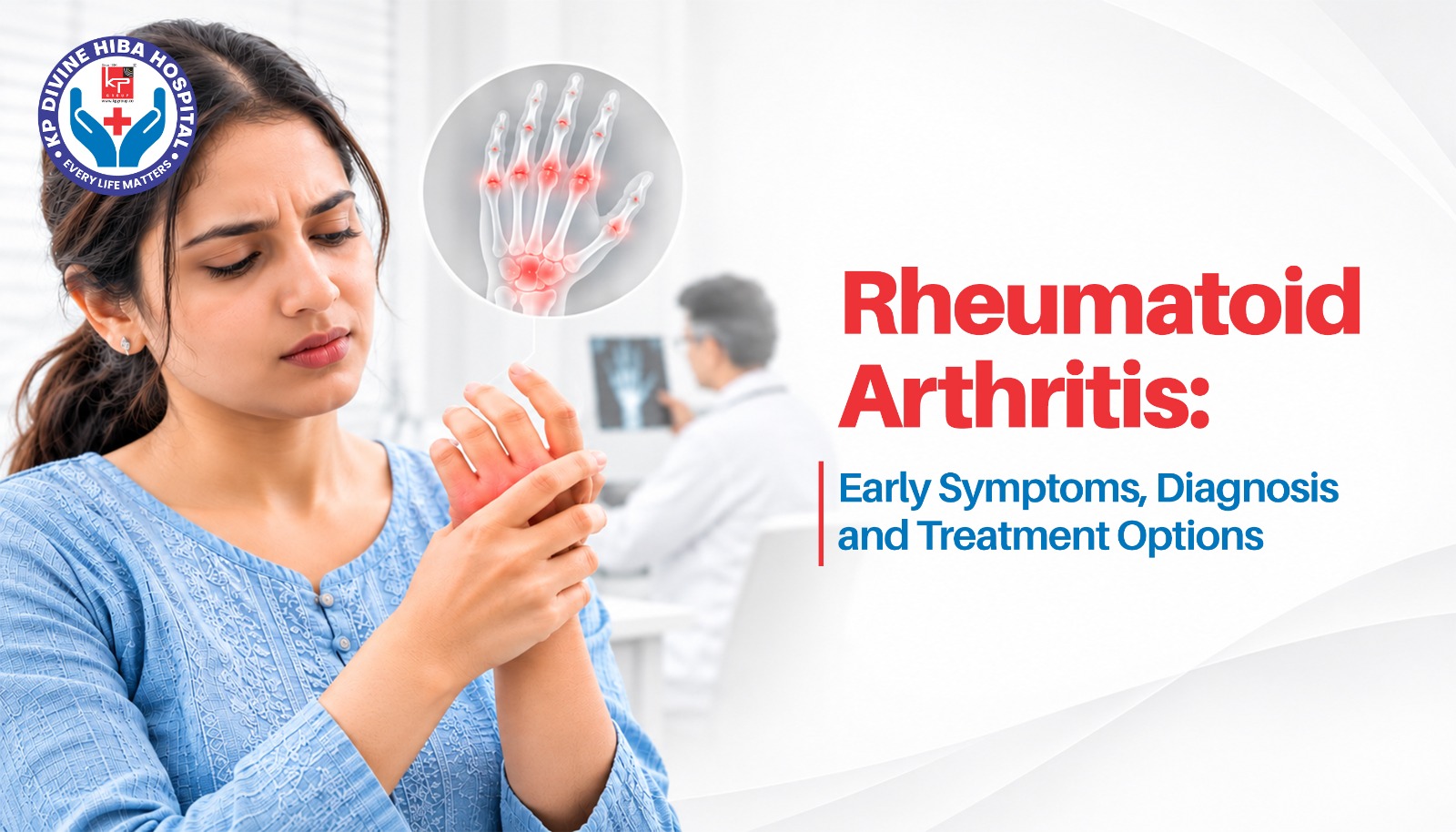
Rheumatoid Arthritis: Early Symptoms, Diagnosis and Treatment Options
Joint pain, stiffness and swelling are often dismissed as normal signs of ageing or physical exhaustion. However, when these symptoms continue for weeks, affect multiple joints or become worse in the morning, they may indicate an underlying condition called Rheumatoid Arthritis (RA).
Rheumatoid arthritis is a chronic autoimmune disease that mainly affects the joints. It occurs when the body's immune system mistakenly attacks healthy joint tissues, causing inflammation, pain and swelling. Unlike temporary joint discomfort, rheumatoid arthritis can gradually damage the joints if it is not diagnosed and managed properly.
One of the challenges with rheumatoid arthritis is that its early symptoms can be mild. Some people initially experience stiffness in their fingers or wrists, while others notice swelling in their knees, feet or other joints. Recognising these warning signs early can make a significant difference in managing the condition.
But how do you identify rheumatoid arthritis? Which tests help confirm the diagnosis? And what treatment options are available?
Let's understand the condition, its early symptoms and the importance of timely medical care.
1. Understanding Rheumatoid Arthritis
Rheumatoid arthritis is an autoimmune and inflammatory disease that primarily affects the joints. In a healthy body, the immune system protects against infections and harmful substances. However, in people with rheumatoid arthritis, the immune system mistakenly attacks the synovium, which is the thin lining surrounding the joints.
This leads to inflammation, causing the joint lining to become swollen and painful. Over time, persistent inflammation may damage the cartilage and bones around the affected joints.
Rheumatoid arthritis commonly affects:
-
Fingers and knuckles.
-
Wrists.
-
Hands and feet.
-
Knees.
-
Ankles.
-
Elbows and shoulders.
One characteristic feature of rheumatoid arthritis is that it often affects the same joints on both sides of the body. For example, a person may experience swelling and pain in both wrists or both hands.
Although rheumatoid arthritis is more commonly diagnosed in women, it can affect anyone, including men and younger adults.
Is rheumatoid arthritis the same as osteoarthritis?
No. Both conditions cause joint pain, but their causes are different.
-
Rheumatoid arthritis: An autoimmune condition in which the immune system attacks the joint lining.
-
Osteoarthritis: A joint condition associated with the breakdown of cartilage, often developing with age, joint injury or repeated joint stress.
Understanding this difference is important because both conditions require different approaches to treatment.
2. Causes and Risk Factors of Rheumatoid Arthritis
The exact cause of rheumatoid arthritis is not fully understood. However, researchers believe that a combination of genetic, environmental and lifestyle factors may contribute to its development.
Some common risk factors include:
1. Genetic Factors
A family history of rheumatoid arthritis may increase the risk of developing the condition. Certain genes associated with immune system functioning can make some individuals more susceptible.
However, having a family member with rheumatoid arthritis does not necessarily mean that you will develop it.
2. Immune System Problems
Rheumatoid arthritis develops when the immune system mistakenly identifies healthy joint tissues as harmful. This abnormal immune response triggers inflammation and can gradually damage the joints.
3. Smoking
Smoking is an important environmental risk factor for rheumatoid arthritis. It can increase the likelihood of developing the condition, particularly in people who already have a genetic tendency towards it.
It may also contribute to more severe disease activity.
4. Hormonal Factors
Rheumatoid arthritis is more common in women than men. Hormonal changes may influence immune system activity and could play a role in the development of the disease.
5. Environmental Factors
Certain environmental exposures, including air pollution and occupational exposure to particular substances, may contribute to rheumatoid arthritis risk in susceptible individuals.
It is important to remember that rheumatoid arthritis is not caused simply by ageing or everyday joint movement.
3. Early Symptoms of Rheumatoid Arthritis You Should Not Ignore
Recognising the early signs of rheumatoid arthritis can help you seek medical attention before significant joint damage develops.
Symptoms may appear gradually or develop over a short period. They can also vary in intensity from person to person.
Here are some common early warning signs.
1. Morning Joint Stiffness
One of the most common early symptoms of rheumatoid arthritis is stiffness in the joints after waking up.
You may experience:
-
Difficulty moving your fingers immediately after waking up.
-
Stiffness in the wrists, ankles or knees.
-
Discomfort when trying to make a fist.
-
Stiffness that lasts for 30 minutes or longer.
Unlike ordinary stiffness that improves quickly, rheumatoid arthritis-related morning stiffness can last for an extended period.
2. Joint Pain and Tenderness
Persistent joint pain is another common symptom. It may initially affect small joints, particularly those in the hands and feet.
You may notice pain while:
-
Holding a glass or cup.
-
Opening a bottle or jar.
-
Writing or typing.
-
Walking or climbing stairs.
-
Performing routine household activities.
The discomfort may gradually increase if inflammation is not controlled.
3. Swelling Around the Joints
Inflammation can cause the affected joints to become swollen, warm and tender.
You may notice swelling around your knuckles, fingers, wrists or toes. Sometimes, the swelling can make rings or footwear feel tighter than usual.
Persistent joint swelling should be evaluated by a medical professional.
4. Pain on Both Sides of the Body
Rheumatoid arthritis often affects joints symmetrically. This means that the same joints on both sides of the body may become painful or swollen.
For example:
-
Both wrists may feel painful.
-
Both hands may experience stiffness.
-
Both feet may become uncomfortable while walking.
However, this pattern is not present in every patient, especially during the early stages.
5. Persistent Fatigue and Weakness
Rheumatoid arthritis does not affect only the joints. Ongoing inflammation can also cause general symptoms.
Some people experience:
-
Constant tiredness.
-
Reduced energy levels.
-
Unexplained weakness.
-
Loss of appetite.
-
Mild fever during periods of increased disease activity.
These symptoms can affect work, daily routines and overall quality of life.
6. Reduced Joint Movement
As inflammation continues, moving the affected joints may become increasingly difficult.
You may struggle to bend your fingers, lift objects, walk comfortably or perform everyday tasks.
If left uncontrolled, long-term inflammation can cause permanent joint damage and deformity.
4. How Is Rheumatoid Arthritis Diagnosed?
Diagnosing rheumatoid arthritis requires a detailed medical assessment. There is no single test that can confirm or completely rule out the condition.
A rheumatologist evaluates your symptoms, medical history, physical examination findings, blood reports and imaging results before making a diagnosis.
Common diagnostic methods include:
1. Physical Examination
The doctor examines the affected joints to check for:
-
Swelling and tenderness.
-
Joint warmth.
-
Pain during movement.
-
Reduced flexibility.
-
Signs of inflammation in multiple joints.
You may also be asked how long you have experienced stiffness and whether symptoms affect both sides of your body.
2. Rheumatoid Factor (RF) Test
The rheumatoid factor test checks for a particular antibody that may be present in people with rheumatoid arthritis.
A positive result may support the diagnosis, but it does not automatically confirm rheumatoid arthritis. Some people without RA can also have a positive RF result.
3. Anti-CCP Antibody Test
The Anti-CCP test detects antibodies commonly associated with rheumatoid arthritis.
It is particularly useful when doctors suspect early rheumatoid arthritis. However, some patients with RA may have negative results.
4. ESR and CRP Tests
These blood tests help identify inflammation in the body.
-
ESR (Erythrocyte Sedimentation Rate): Measures how quickly red blood cells settle in a test tube. A higher rate may indicate inflammation.
-
CRP (C-Reactive Protein): Measures a protein produced by the liver in response to inflammation.
These tests help doctors assess disease activity and monitor the response to treatment.
5. X-rays, Ultrasound and MRI
Imaging tests help doctors examine the joints and identify inflammation or structural damage.
-
X-rays: Help detect joint damage and changes in bone structure.
-
Ultrasound: Can identify joint inflammation and swelling in soft tissues.
-
MRI: Provides detailed images of joints and can help detect early inflammatory changes.
Early rheumatoid arthritis may not always produce visible changes on X-rays, which is why doctors may recommend additional tests.
People also search for Blood in Urine related information: Blood in Urine: Common Causes and When Should You See a Urologist?
5. Treatment Options for Rheumatoid Arthritis
Although rheumatoid arthritis does not currently have a permanent cure, effective treatment can control inflammation, reduce pain and slow the progression of joint damage.
The treatment plan depends on the severity of the condition, the joints affected, disease activity and the patient's overall health.
The main goal is to achieve remission or low disease activity, allowing patients to maintain mobility and enjoy a better quality of life.
1. Disease-Modifying Antirheumatic Drugs (DMARDs)
DMARDs are among the most important medicines used to treat rheumatoid arthritis.
They work by controlling the abnormal immune response and slowing the progression of the disease.
Common examples include:
-
Methotrexate.
-
Sulfasalazine.
-
Hydroxychloroquine.
-
Leflunomide.
These medicines may take several weeks or months to show their full benefits. Regular medical monitoring is important to check their effectiveness and possible side effects.
2. Biologic Medicines
Biologic DMARDs target specific parts of the immune system responsible for inflammation.
They may be recommended when conventional medicines do not provide sufficient disease control.
The choice of biologic treatment depends on the patient's medical condition, previous treatment response and risk factors.
3. Pain Relief and Anti-Inflammatory Medicines
Doctors may prescribe non-steroidal anti-inflammatory drugs (NSAIDs) to reduce joint pain and swelling.
Corticosteroids may also be used for short periods in selected patients to control severe inflammation or manage flare-ups.
These medicines help manage symptoms but do not replace disease-modifying treatment.
4. Physiotherapy and Occupational Therapy
Physiotherapy plays an important role in rheumatoid arthritis management.
A physiotherapist may recommend:
-
Gentle joint movement exercises.
-
Muscle-strengthening activities.
-
Flexibility exercises.
-
Balance and mobility training.
-
Techniques to protect affected joints.
Occupational therapy can also help patients adapt everyday activities to reduce pressure on painful joints.
5. Surgical Treatment
Surgery may be considered when severe joint damage causes persistent pain or limits movement despite appropriate medical treatment.
Depending on the affected joint, surgical options may include joint replacement, joint repair or other corrective procedures.
The decision is made after carefully evaluating the patient's condition.
6. Lifestyle Changes to Help Manage Rheumatoid Arthritis
Along with medical treatment, healthy lifestyle habits can help patients manage symptoms and maintain joint function.
Here are some practical steps:
Stay Physically Active
Regular, low-impact activities can help maintain joint flexibility and muscle strength.
Consider activities such as:
-
Walking.
-
Swimming.
-
Cycling.
-
Gentle stretching.
-
Doctor-recommended physiotherapy exercises.
Avoid pushing painful or swollen joints beyond your comfort level.
Follow a Balanced Diet
A healthy diet supports overall well-being and helps maintain a healthy body weight.
Include:
-
Fresh fruits and vegetables.
-
Whole grains.
-
Nuts and seeds.
-
Protein-rich foods.
-
Omega-3-rich foods such as fish, where suitable.
No particular diet can cure rheumatoid arthritis, but balanced nutrition supports general health.
Maintain a Healthy Weight
Excess body weight can increase pressure on weight-bearing joints, especially the knees and ankles. Maintaining a healthy weight may help reduce this additional strain.
Get Adequate Rest
Fatigue is common in rheumatoid arthritis. Getting sufficient sleep and balancing physical activity with rest can help manage tiredness.
Avoid Smoking
Smoking can increase rheumatoid arthritis risk and may make disease management more difficult. Quitting smoking is an important step towards better overall health.
Why Choose KP Divine Hiba Hospital for Rheumatoid Arthritis Treatment in Surat?
Living with rheumatoid arthritis can be physically and emotionally challenging. Persistent pain, swelling and stiffness can affect even simple daily activities.
Getting the right medical guidance, accurate diagnosis and a suitable treatment plan is important for managing the condition.
KP Divine Hiba Hospital, Surat, offers specialised rheumatology and orthopaedic care to help patients manage arthritis, autoimmune conditions and other joint-related problems.
Here is why patients can consider KP Divine Hiba Hospital for rheumatoid arthritis consultation and treatment:
Dedicated Rheumatology Department
The hospital has a dedicated rheumatology department that provides care for conditions such as:
-
Rheumatoid arthritis.
-
Osteoarthritis and other arthritis conditions.
-
Lupus.
-
Gout.
-
Autoimmune disorders.
-
Connective tissue diseases.
Comprehensive Diagnostic Facilities
Accurate diagnosis is essential for identifying the type and severity of arthritis. The hospital provides laboratory testing, digital X-ray and diagnostic imaging support to assist in medical evaluation.
Orthopaedic and Joint Care
In addition to rheumatology, the hospital offers orthopaedic services, arthroscopy and sports injury care, knee and hip replacement and physiotherapy.
This allows patients with different joint-related problems to access appropriate specialist care.
Advanced Hospital Infrastructure
KP Divine Hiba Hospital is equipped with modern operation theatres, advanced ICU facilities, diagnostic laboratories and an in-house pharmacy to support different stages of patient care.
Personalised and Compassionate Treatment
Every patient experiences rheumatoid arthritis differently. The hospital focuses on individual medical assessment and treatment planning based on symptoms, health history and clinical requirements.
With 33+ medical specialities, NABH accreditation and a patient-focused approach, KP Divine Hiba Hospital aims to provide accessible and comprehensive healthcare under one roof.
Conclusion
Rheumatoid arthritis is more than just ordinary joint pain. It is a chronic autoimmune condition that can gradually affect joint health, mobility and everyday activities.
Early symptoms such as morning stiffness, swollen fingers, persistent joint pain and unexplained fatigue should not be ignored. Timely diagnosis and appropriate treatment can help control inflammation, slow joint damage and improve quality of life.
If you or a family member experiences persistent joint swelling, stiffness or pain, consult a rheumatologist for proper evaluation.
Choose KP Divine Hiba Hospital, Surat, for specialised rheumatology care, comprehensive diagnostic support, advanced medical facilities and compassionate treatment.
Take the first step towards healthier joints and better mobility. Book your consultation at KP Divine Hiba Hospital today.
Appointment Booking: 96249 93768
24/7 Emergency Helpline: 63579 70711
Address: KP Divine Hiba Hospital, Shreyam Complex, Near Dhanmora Complex, Adajan Patia, Surat, Gujarat.
Need personal guidance?
Book a consultation with the right specialist at KP Divine Hiba Hospital.