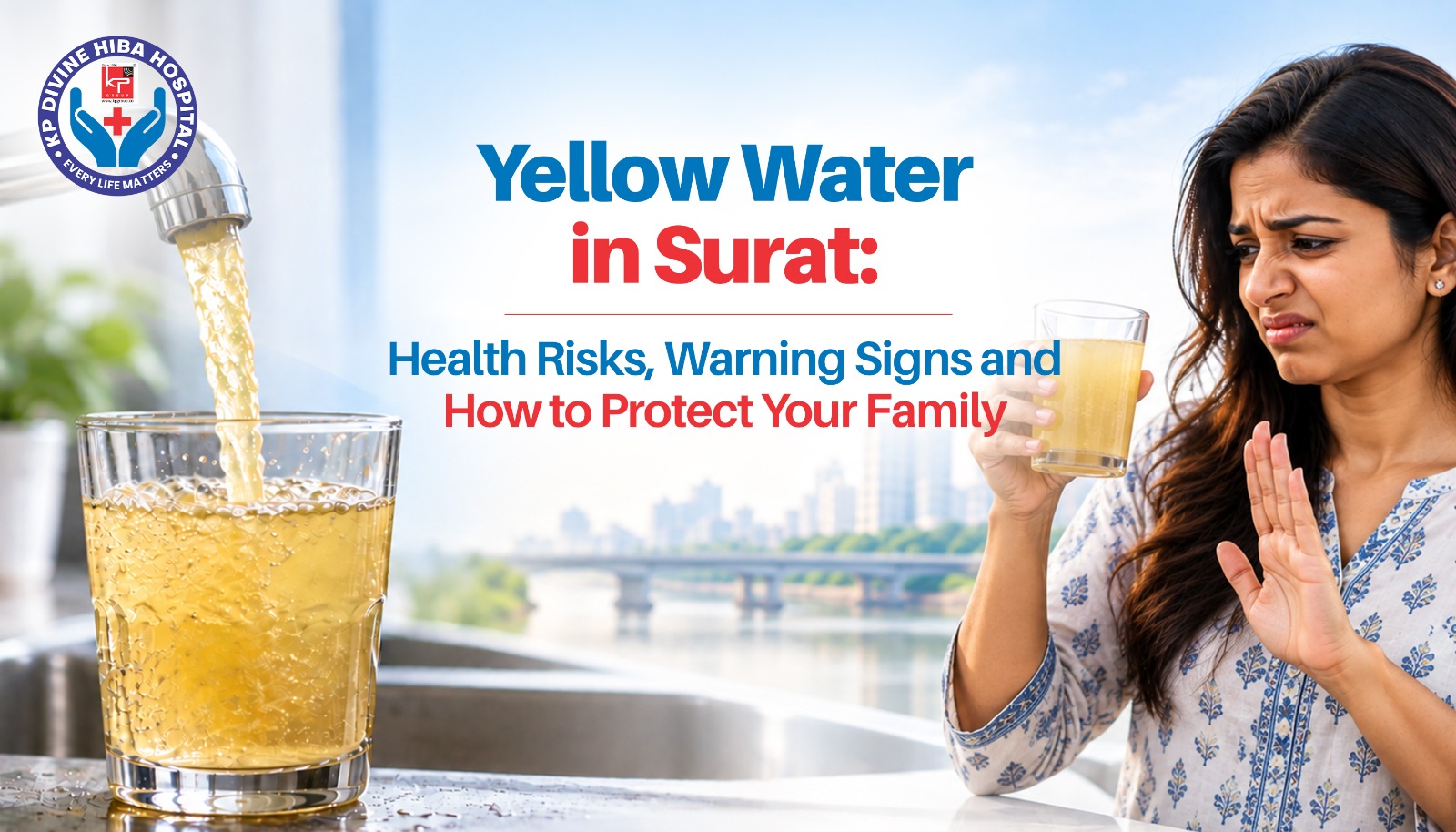
Yellow Water in Surat: Health Risks, Warning Signs and How to Protect Your Family
Introduction: Is Your Drinking Water Safe?
Water is essential for everyday life, but its quality is just as important as its availability. When tap water suddenly turns yellow, brown, or cloudy, it raises an important question: Is it safe to use?
Concerns about yellow water in Surat highlight the need for greater awareness of drinking water safety. Discoloured water may result from rust in pipelines, disturbed sediments, minerals, or other water quality issues. In some cases, contamination may also be a concern.
Although yellow water does not automatically mean it contains harmful germs, its unusual appearance should not be ignored. At KP Divine Hiba Hospital, we believe that understanding potential health risks and taking timely precautions can help families make safer decisions.
What Causes Yellow Water in Your Home?
Before understanding the possible health effects, it is important to know why water may change colour.
-
Rusty pipelines: Corrosion in iron pipes can release particles that turn water yellow, orange, or brown.
-
Pipeline repairs: Maintenance work or sudden changes in water pressure can disturb sediments inside distribution pipes.
-
Water supply contamination: Damaged pipelines or leaks near sewage lines may create opportunities for harmful microorganisms to enter the water.
-
Minerals and other substances: Certain minerals, organic matter, or chemical contaminants may affect water colour and quality.
The actual cause cannot be identified by appearance alone. Appropriate water testing is necessary to determine whether the water is safe.
Health Problems Associated With Contaminated Drinking Water
If discoloured water contains harmful microorganisms, consuming it may lead to several illnesses. The risk depends on the type and amount of contamination.
1. Diarrhoea and Stomach Infections
Unsafe water can contain bacteria, viruses, or parasites that affect the digestive system.
Symptoms to watch for:
-
Loose or frequent stools
-
Stomach cramps
-
Nausea and vomiting
-
Weakness and dehydration
Young children and older adults are particularly vulnerable to complications caused by fluid loss.
2. Typhoid Fever
Typhoid can spread through food and water contaminated with Salmonella Typhi bacteria.
Common symptoms include persistent fever, headache, fatigue, and abdominal discomfort. If these symptoms develop, consult a doctor for appropriate evaluation and treatment.
3. Hepatitis A and Hepatitis E
These viral infections can spread through food or water contaminated with infected human waste and affect the liver.
Warning signs may include tiredness, nausea, reduced appetite, dark urine, and yellowing of the skin or eyes. Seek medical attention if you notice these symptoms.
4. Cholera
Cholera is an intestinal infection associated with contaminated water and can cause severe watery diarrhoea.
Rapid fluid loss may lead to serious dehydration. Profuse watery diarrhoea, dizziness, or extreme weakness requires urgent medical attention.
5. Infections Caused by Parasites
Some waterborne parasites, including Giardia and Cryptosporidium, can cause digestive problems such as diarrhoea, abdominal cramps, and nausea.
Remember: These illnesses are linked to specific types of contamination, not to yellow colour itself. Water quality testing is essential to establish the actual risk.
Early Warning Signs You Should Not Ignore
If you or a family member has consumed water of uncertain quality, pay attention to any unusual symptoms.
| Symptom | Why it matters |
|---|---|
| Frequent diarrhoea | May lead to dehydration |
| Repeated vomiting | Can cause fluid and electrolyte loss |
| Persistent fever | May indicate an infection |
| Reduced urination or dizziness | Possible signs of dehydration |
| Yellow skin or eyes | May indicate a liver-related condition |
These symptoms can have several causes and do not necessarily confirm a waterborne illness. Consult a healthcare professional for an accurate diagnosis.
Seek emergency care for confusion, fainting, severe dehydration, inability to keep fluids down, blood in the stool, or profuse watery diarrhoea.
Practical Steps to Keep Your Family Safe
When tap water appears yellow or unusual, taking the right precautions can help reduce exposure to potential contaminants.
Use a Verified Safe Water Source
Avoid drinking or cooking with discoloured water until its safety is confirmed. Use sealed bottled water from a reliable source or another verified safe supply.
Boil Water When Microbial Contamination Is Suspected
If public health authorities recommend boiling, bring water to a rolling boil for at least one minute and allow it to cool naturally in a clean, covered container.
Boiling kills many disease-causing microorganisms but does not remove most chemical contaminants or heavy metals. If chemical contamination is suspected, use an alternative safe water source.
Be Careful With Food Preparation
Use safe water for drinking, cooking, brushing teeth, washing raw fruits and vegetables, and preparing ice. Pay special attention to water used for infant formula.
Do Not Depend on Colour or a Filter Alone
Water that looks clear is not necessarily safe. Similarly, a basic household filter may remove visible particles without removing bacteria, viruses, metals, or chemicals.
Choose a suitable treatment method based on water quality testing and expert guidance.
Report Persistent Discolouration
If yellow water continues to come from your taps, report the issue to the Surat Municipal Corporation or the relevant water supply authority. Request information about local advisories and appropriate water testing.
Maintain Water Storage Tanks
Clean household storage containers regularly, keep them covered, and arrange proper maintenance of overhead and underground tanks to reduce the risk of contamination.
When Should You Consult a Doctor?
Do not ignore digestive symptoms, persistent fever, or unusual weakness following possible exposure to unsafe water.
Medical advice is especially important for:
-
Children with diarrhoea or vomiting
-
Older adults showing signs of dehydration
-
People experiencing persistent fever or abdominal pain
-
Anyone with dark urine or yellowing of the skin or eyes
A doctor can assess your symptoms and recommend suitable investigations or treatment. Avoid taking antibiotics without medical advice, as treatment depends on the underlying cause.
If you experience severe dehydration, fainting, confusion, or profuse watery diarrhoea, seek emergency care immediately.
Frequently Asked Questions About Yellow Water
Is yellow water in Surat dangerous?
Not always, but it should not be assumed safe. Rust and sediments may cause discolouration, while other causes may involve contamination. Testing is needed to determine the risk.
Can yellow water cause diarrhoea?
Yellow colour alone does not cause diarrhoea. However, if the water contains harmful microorganisms, it may transmit infections that cause diarrhoea and vomiting.
Is boiling enough to make yellow water safe?
No. Boiling can kill many harmful microorganisms but does not remove most chemical contaminants or heavy metals. Use a verified safe alternative if the cause is unknown or chemical contamination is suspected.
What should I do if I have stomach pain after drinking questionable water?
Monitor your symptoms and consult a healthcare professional if they persist or worsen. Seek urgent care for severe pain, blood in the stool, profuse diarrhoea, or signs of dehydration.
How can I confirm that drinking water is safe?
Water testing by an appropriate laboratory, together with guidance from the relevant water supply authority, can help establish its safety. Appearance and smell alone are not reliable indicators.
Final Thoughts: Make Water Safety a Priority
Yellow water is a reason to pay attention to drinking water quality, but its colour alone cannot tell us whether it is contaminated or which health risks may be present.
Until the cause is established, use a verified safe water source, follow official advisories, maintain good hygiene, and seek medical advice when symptoms develop.
KP Divine Hiba Hospital encourages every family to stay informed about water safety, recognise the warning signs of illness, and seek timely medical care when needed. A few sensible precautions today can help protect your family's health tomorrow.
Disclaimer: This article is intended for general health awareness and does not replace professional medical advice, diagnosis, or treatment.
Need personal guidance?
Book a consultation with the right specialist at KP Divine Hiba Hospital.