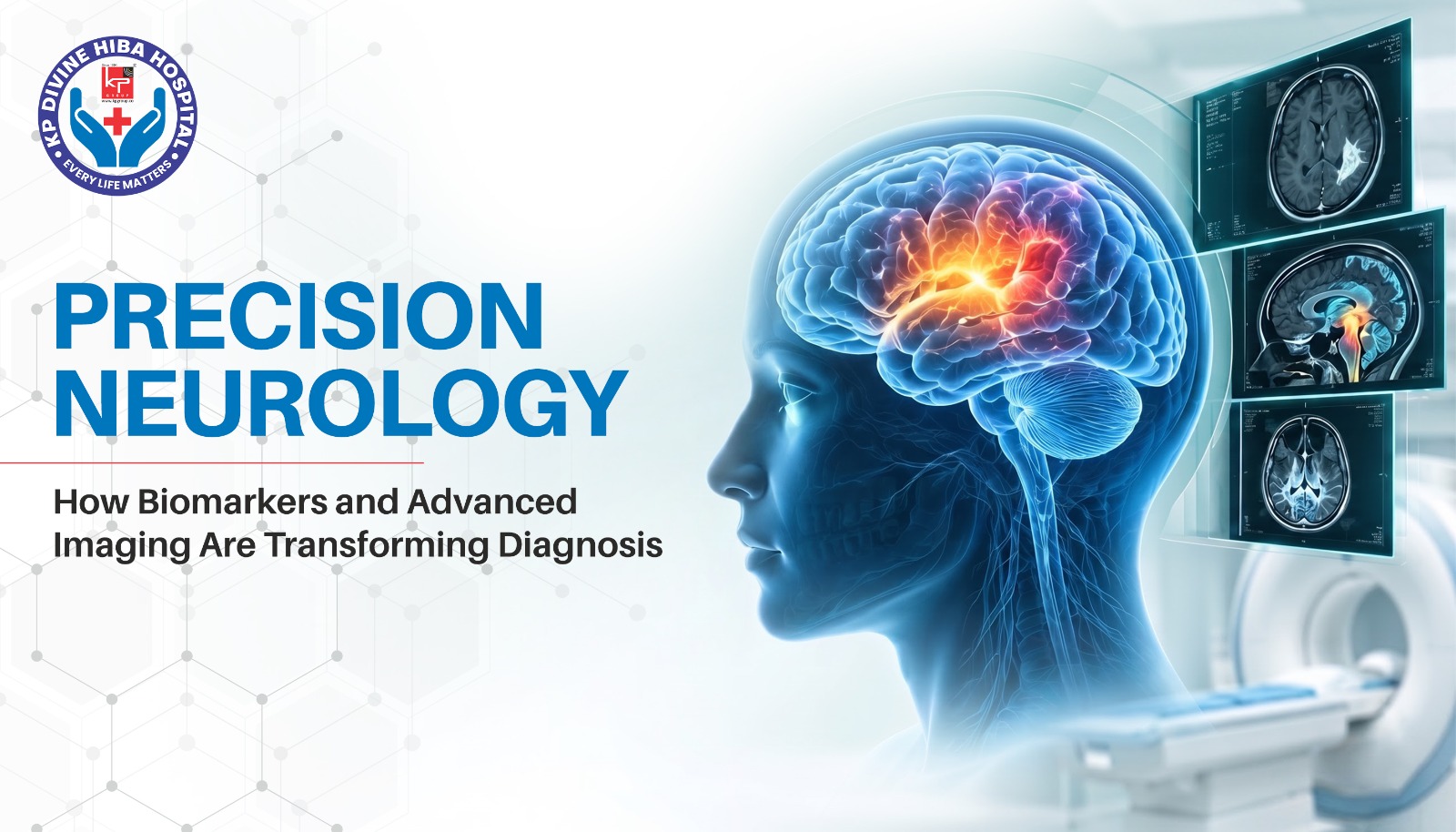
Precision Neurology: How Biomarkers and Advanced Imaging Are Transforming Diagnosis
Neurological disorders can be difficult to diagnose because many conditions share similar symptoms. Headaches, dizziness, memory problems, weakness, seizures, balance difficulties and changes in behaviour may have very different underlying causes.
Traditionally, doctors have relied on a combination of medical history, neurological examination, imaging and laboratory tests to identify the cause. Today, advances in neurology, brain imaging and neurological biomarkers are helping doctors look deeper into what is happening inside the brain and nervous system.
This emerging approach is often described as precision neurology—a way of moving toward more individualized diagnosis and treatment by combining clinical information with biological and imaging data. For patients and families, the goal is simple: find the cause more accurately, understand how a neurological condition is changing and choose appropriate care as early as possible.
At KP Divine Hiba Hospital, advanced neurological evaluation is supported by specialist consultation, diagnostic imaging and multidisciplinary care through its Neurology & Neurosurgery services.
𝗪𝗵𝗮𝘁 𝗜𝘀 𝗣𝗿𝗲𝗰𝗶𝘀𝗶𝗼𝗻 𝗡𝗲𝘂𝗿𝗼𝗹𝗼𝗴𝘆?
Precision neurology refers to a more individualized approach to diagnosing and managing neurological disorders. Instead of relying on one symptom or one test, neurologists may bring together several types of information, including:
- Symptoms and medical history
- Neurological examination
- Blood and other laboratory tests
- Neurological biomarkers
- MRI and other brain imaging
- Genetic information when appropriate
- Cognitive and functional assessments
- Treatment response and disease progression
This approach is particularly useful because neurological diseases can behave differently from one patient to another.
For example, two people may have memory problems but have completely different underlying conditions. Similarly, patients with the same neurological diagnosis may experience different symptoms or disease progression.
Precision medicine in neurology aims to better understand these differences.
𝗪𝗵𝘆 𝗔𝗰𝗰𝘂𝗿𝗮𝘁𝗲 𝗡𝗲𝘂𝗿𝗼𝗹𝗼𝗴𝗶𝗰𝗮𝗹 𝗗𝗶𝗮𝗴𝗻𝗼𝘀𝗶𝘀 𝗠𝗮𝘁𝘁𝗲𝗿𝘀
A neurological diagnosis is more than simply giving a name to a condition. An accurate diagnosis can help answer important questions:
- What is causing the symptoms?
- Is the condition progressing?
- Is treatment working?
- Could another condition be responsible?
- Does the patient need specialist or surgical evaluation?
- What monitoring may be required over time?
For patients and families, uncertainty can be one of the hardest parts of dealing with neurological symptoms. Modern diagnostic approaches can help doctors reduce uncertainty and develop a clearer picture of the patient's condition.
𝗧𝗵𝗲 𝗚𝗿𝗼𝘄𝗶𝗻𝗴 𝗥𝗼𝗹𝗲 𝗼𝗳 𝗡𝗲𝘂𝗿𝗼𝗹𝗼𝗴𝗶𝗰𝗮𝗹 𝗕𝗶𝗼𝗺𝗮𝗿𝗸𝗲𝗿𝘀
A biomarker is a measurable biological characteristic that can provide information about a disease or a biological process. In neurology, biomarkers may help identify changes associated with neurological disorders, understand disease activity or monitor how a patient responds to treatment. Depending on the condition, biomarkers may be identified through:
- Blood tests
- Cerebrospinal fluid (CSF) analysis
- Genetic testing
- Molecular testing
- Imaging-based measurements
The use of biomarkers is an evolving area of neurological medicine. Not every neurological condition currently has a reliable biomarker, and testing must be selected based on the patient's symptoms and clinical situation. Biomarkers in Neurodegenerative Diseases Researchers and clinicians are increasingly studying biomarkers associated with diseases such as Alzheimer's disease and other neurodegenerative disorders.
Certain biological markers can provide information about abnormal proteins or other processes associated with disease. This may help doctors distinguish between different causes of cognitive decline in appropriate clinical settings. However, a biomarker should not be interpreted in isolation. Symptoms, neurological examination, medical history and imaging remain important parts of diagnosis.
𝗛𝗼𝘄 𝗔𝗱𝘃𝗮𝗻𝗰𝗲𝗱 𝗕𝗿𝗮𝗶𝗻 𝗜𝗺𝗮𝗴𝗶𝗻𝗴 𝗜𝘀 𝗖𝗵𝗮𝗻𝗴𝗶𝗻𝗴 𝗡𝗲𝘂𝗿𝗼𝗹𝗼𝗴𝘆
Brain imaging has become an essential part of modern neurological diagnosis. An MRI scan, for example, can provide detailed images of the brain and help doctors investigate conditions affecting brain tissue, blood vessels and other structures. Depending on the clinical question, doctors may use different imaging approaches.
- MRI Brain
- MRI brain imaging provides detailed structural information without using X-rays.
It can help doctors investigate conditions such as: -Stroke -Brain tumours -Multiple sclerosis -Certain infections -Structural abnormalities -Some causes of seizures -Changes associated with neurological disorders
MRI findings must always be interpreted alongside symptoms and clinical examination. Diffusion-Weighted Imaging Diffusion-sensitive MRI techniques can provide important information about the movement of water molecules in brain tissue.
They are particularly valuable in evaluating certain types of acute stroke and other neurological conditions.
𝗠𝗥 𝗔𝗻𝗴𝗶𝗼𝗴𝗿𝗮𝗽𝗵𝘆
MR angiography (MRA) can help visualize blood vessels and may be used when doctors need to investigate conditions affecting cerebral circulation.
This can be relevant when evaluating suspected vascular problems, aneurysms or other blood-vessel abnormalities.
𝗙𝘂𝗻𝗰𝘁𝗶𝗼𝗻𝗮𝗹 𝗮𝗻𝗱 𝗠𝗼𝗹𝗲𝗰𝘂𝗹𝗮𝗿 𝗜𝗺𝗮𝗴𝗶𝗻𝗴
Some advanced imaging techniques are designed to provide information beyond basic anatomy. Functional imaging can provide insights into brain activity, while molecular imaging approaches can help visualize specific biological processes in selected conditions. These techniques are particularly important in research and specialized diagnostic settings and may not be necessary for every patient.
𝗣𝗿𝗲𝗰𝗶𝘀𝗶𝗼𝗻 𝗡𝗲𝘂𝗿𝗼𝗹𝗼𝗴𝘆 𝗮𝗻𝗱 𝗦𝘁𝗿𝗼𝗸𝗲 𝗗𝗶𝗮𝗴𝗻𝗼𝘀𝗶𝘀
Stroke is one area where rapid and accurate diagnosis can have a major impact. When someone develops sudden weakness, facial drooping, speech difficulty, vision problems or loss of balance, emergency evaluation is essential.
Brain imaging can help doctors determine whether symptoms are related to bleeding, blocked blood flow or another cause.
Depending on the situation, doctors may use CT, CT angiography, MRI or other investigations. The faster the underlying problem is identified, the sooner appropriate treatment decisions can be considered. Never wait for advanced testing if someone develops sudden symptoms of stroke. Emergency medical assessment should begin immediately.
𝗔𝗱𝘃𝗮𝗻𝗰𝗲𝗱 𝗗𝗶𝗮𝗴𝗻𝗼𝘀𝗶𝘀 𝗶𝗻 𝗦𝗲𝗶𝘇𝘂𝗿𝗲 𝗮𝗻𝗱 𝗘𝗽𝗶𝗹𝗲𝗽𝘀𝘆 𝗖𝗮𝗿𝗲
Seizures can have many causes, and not every episode that looks like a seizure is caused by epilepsy. Neurologists may use a combination of:
- Detailed history
- Neurological examination
- EEG
- Brain MRI
- Blood tests
Other specialized investigations when required Advanced imaging can help identify structural abnormalities that may contribute to seizures.
In patients with difficult-to-control epilepsy, detailed diagnostic evaluation can become particularly important when considering advanced treatment or epilepsy surgery.
𝗣𝗿𝗲𝗰𝗶𝘀𝗶𝗼𝗻 𝗡𝗲𝘂𝗿𝗼𝗹𝗼𝗴𝘆 𝗶𝗻 𝗕𝗿𝗮𝗶𝗻 𝗧𝘂𝗺𝗼𝘂𝗿 𝗖𝗮𝗿𝗲
Brain tumours require careful evaluation because their location, size, biological characteristics and relationship with important brain structures can vary greatly.
Imaging helps neurosurgeons understand the tumour's location and characteristics and plan treatment. Depending on the case, patients may undergo MRI and other imaging studies before or after surgery. In selected cases, tissue obtained through biopsy or surgery can also provide important information about the tumour's biological characteristics.
This combination of brain imaging, pathology and clinical assessment helps specialists develop an individualized treatment strategy.
𝗡𝗲𝘂𝗿𝗼𝗹𝗼𝗴𝗶𝗰𝗮𝗹 𝗗𝗶𝗮𝗴𝗻𝗼𝘀𝗶𝘀 𝗔𝗳𝘁𝗲𝗿 𝗖𝗮𝗻𝗰𝗲𝗿 𝗧𝗿𝗲𝗮𝘁𝗺𝗲𝗻𝘁
For cancer survivors, neurological symptoms can sometimes create additional concerns. Memory difficulties, headaches, numbness, weakness, balance problems or changes in concentration may have different causes. Depending on the individual's cancer history and treatment, doctors may need to consider several possibilities.
A neurological evaluation can help determine whether symptoms are related to:
- A neurological disorder
- Previous cancer treatment
- Medication effects
- Vascular problems
- Metabolic or nutritional factors
- Sleep or psychological factors
- Another unrelated medical condition
This is why persistent neurological symptoms after cancer treatment should not simply be ignored or assumed to be a normal part of recovery.
Appropriate neurological monitoring after cancer treatment can help patients and families understand changes and seek timely care when necessary.
How Biomarkers and Imaging Work Together
One of the most important developments in precision neurology is the ability to combine different sources of information.
Consider a patient experiencing progressive memory problems. A doctor may evaluate:
- The patient's symptoms and medical history.
- Cognitive function.
- Blood tests to identify potentially reversible causes.
- Brain imaging to assess structural changes.
- Biomarker testing when clinically appropriate.
- The patient's progression over time.
Each piece of information contributes to the overall clinical picture.
This approach is more meaningful than treating a single test result as a complete diagnosis.
Benefits of Precision Neurology for Patients The development of advanced neurological diagnostics may provide several benefits.
- Earlier Identification
Some diseases may be identified earlier when symptoms, biomarkers and imaging findings are considered together.
- Better Disease Monitoring
Repeated clinical assessments and selected tests can help doctors understand whether a condition is stable or progressing.
- More Personalized Treatment
Different patients may respond differently to treatment. A more detailed understanding of the disease may help specialists select appropriate management strategies.
- Better Communication With Families
A clearer understanding of the condition can help patients and families make informed decisions about treatment, rehabilitation and long-term care.
𝗜𝘀 𝗔𝗱𝘃𝗮𝗻𝗰𝗲𝗱 𝗧𝗲𝘀𝘁𝗶𝗻𝗴 𝗡𝗲𝗲𝗱𝗲𝗱 𝗳𝗼𝗿 𝗘𝘃𝗲𝗿𝘆𝗼𝗻𝗲? No.
One of the most important points about modern neurological diagnosis is that more testing does not always mean better care.
A specialist should first understand the patient's symptoms and clinical history. Tests should then be selected based on the diagnostic question.
For some patients, a detailed neurological examination and basic investigations may provide sufficient information. For others, advanced MRI, EEG, biomarker testing or additional neurological investigations may be appropriate. This individualized approach can reduce unnecessary testing while ensuring that important conditions are not overlooked.
𝗪𝗵𝗮𝘁 𝗦𝗵𝗼𝘂𝗹𝗱 𝗬𝗼𝘂 𝗗𝗼 𝗜𝗳 𝗬𝗼𝘂 𝗛𝗮𝘃𝗲 𝗣𝗲𝗿𝘀𝗶𝘀𝘁𝗲𝗻𝘁 𝗡𝗲𝘂𝗿𝗼𝗹𝗼𝗴𝗶𝗰𝗮𝗹 𝗦𝘆𝗺𝗽𝘁𝗼𝗺𝘀?
Do not ignore symptoms simply because they seem mild or intermittent. Speak with a doctor if you experience:
- Recurrent or severe headaches
- Unexplained seizures
- Memory or cognitive changes
- Persistent dizziness or balance problems
- Numbness or weakness
- Tremors or abnormal movements
- Speech or vision changes
- Repeated episodes of confusion
- Changes in walking or coordination
- Neurological symptoms after cancer treatment
Sudden neurological symptoms—especially facial weakness, arm weakness, speech difficulty, severe sudden headache, loss of consciousness or sudden vision changes—require urgent medical evaluation.
The Future of Neurological Diagnosis Precision neurology is still developing.
Researchers continue to investigate new biomarkers, artificial intelligence-assisted imaging, advanced MRI techniques, genetic testing and other technologies that could make neurological diagnosis increasingly specific. The future is not simply about having more technology. It is about using the right information for the right patient at the right time.
For patients, this could eventually mean earlier diagnosis, better monitoring and treatment plans that are more closely matched to the biology of their condition.
But even as technology advances, the doctor-patient relationship remains central. A scan or biomarker cannot replace understanding the patient's symptoms, concerns, daily challenges and quality of life. Neurology & Neurosurgery Care at KP Divine Hiba Hospital
When neurological symptoms affect your health, independence or quality of life, getting the right specialist evaluation matters.
𝗞𝗣 𝗗𝗶𝘃𝗶𝗻𝗲 𝗛𝗶𝗯𝗮 𝗛𝗼𝘀𝗽𝗶𝘁𝗮𝗹 provides Neurology & Neurosurgery services for the assessment and management of neurological and neurosurgical conditions. The hospital focuses on combining specialist expertise with appropriate diagnostic evaluation to help patients receive timely and individualized care.
Whether you are experiencing persistent neurological symptoms, require follow-up after a neurological diagnosis, or need specialist evaluation for a condition requiring neurosurgical care, professional assessment can help determine the next appropriate step.
Take the Next Step Toward Better Neurological Care
Neurological symptoms should not be ignored, especially when they persist, worsen or interfere with everyday life. Choose 𝗞𝗣 𝗗𝗶𝘃𝗶𝗻𝗲 𝗛𝗶𝗯𝗮 𝗛𝗼𝘀𝗽𝗶𝘁𝗮𝗹 for Neurology & Neurosurgery care and speak with experienced specialists about your symptoms, diagnosis and treatment options.
Early evaluation can bring greater clarity—and for patients and families, that clarity can be an important step toward better long-term health and quality of life.
𝗙𝗿𝗲𝗾𝘂𝗲𝗻𝘁𝗹𝘆 𝗔𝘀𝗸𝗲𝗱 𝗤𝘂𝗲𝘀𝘁𝗶𝗼𝗻𝘀
What is precision neurology? Precision neurology is an individualized approach to neurological care that combines clinical assessment with information from imaging, biomarkers, laboratory tests, genetics and other investigations when appropriate.
What are neurological biomarkers? Neurological biomarkers are measurable biological indicators that can provide information about a neurological disease or biological process. Depending on the condition, biomarkers may be assessed using blood, cerebrospinal fluid, genetic or other testing.
How does MRI help diagnose neurological disorders? MRI produces detailed images of the brain and nervous system. It can help doctors identify structural abnormalities and investigate conditions such as stroke, tumours, multiple sclerosis and certain causes of seizures.
Does every patient with neurological symptoms need advanced imaging? No. The need for MRI or other advanced tests depends on symptoms, medical history and findings from the neurological examination. A specialist can determine which investigations are appropriate.
Can neurological problems occur after cancer treatment? Yes. Some cancer survivors may experience neurological symptoms related to treatment, medications, other medical conditions or an unrelated neurological disorder. Persistent symptoms should be evaluated rather than automatically attributed to cancer treatment.
When should I see a neurologist? Consider consulting a neurologist for persistent or unexplained headaches, seizures, memory problems, weakness, numbness, tremors, balance difficulties, movement problems or other recurring neurological symptoms.
Need personal guidance?
Book a consultation with the right specialist at KP Divine Hiba Hospital.